
Medicine information
Uses & overview
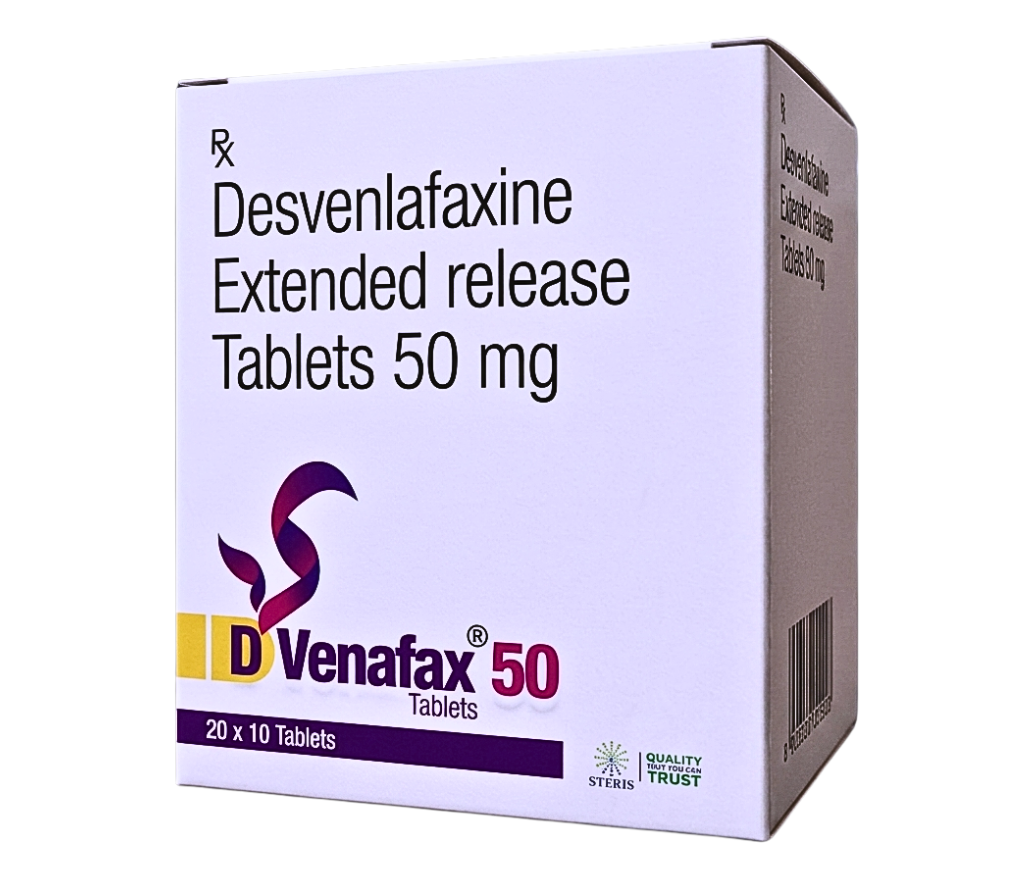
Desvenlafaxine ER 50 mg is an extended-release prescription medication primarily used for the treatment of major depressive disorder in adults. It contains desvenlafaxine, an SNRI antidepressant that helps increase the availability of serotonin and norepinephrine in the brain by reducing their reuptake. These neurotransmitters play important roles in regulating mood and emotional responses. The extended-release formulation is designed to release the active ingredient gradually over time. Desvenlafaxine ER 50 mg should be taken exactly as prescribed by a qualified healthcare professional. The dose and duration of treatment depend on the patient’s condition, response to therapy, other medicines, and individual medical history. Improvement may take several weeks, so regular follow-up is important even if the full benefits are not immediately noticeable. Common side effects may include nausea, dizziness, sweating, dry mouth, constipation, sleep disturbances, and changes in appetite. Seek urgent medical attention for severe agitation, unusual mood changes, serotonin syndrome symptoms, or thoughts of self-harm. Do not stop this medicine abruptly because withdrawal symptoms may occur.
How to use
Follow the prescription: Take Desvenlafaxine ER 50 mg exactly as directed by your doctor. Do not adjust the dose or treatment duration independently. Take it consistently: Take the medicine at approximately the same time each day to maintain a regular treatment routine. Swallow the tablet whole: Do not crush, chew, or split the extended-release tablet unless your pharmacist confirms that the specific formulation allows it. Food and water: It can generally be taken with or without food. Swallow it with water and follow any product-specific instructions. Missed dose: Take the missed dose when remembered unless it is nearly time for the next dose. If it is nearly time, skip the missed dose. Never take two doses together. Monitor your response: Attend follow-up appointments so your doctor can assess improvement, side effects, and whether treatment adjustments are needed. Avoid abrupt discontinuation: Stopping suddenly may cause dizziness, irritability, nausea, sleep disturbances, or other withdrawal symptoms. Your doctor can guide gradual dose reduction when appropriate. Check other medicines: Inform your healthcare professional about all medicines and supplements you use, particularly other antidepressants, tramadol, and medicines that may increase serotonin levels.
Storage
Store in cool and dry place