
Medicine information
Uses & overview
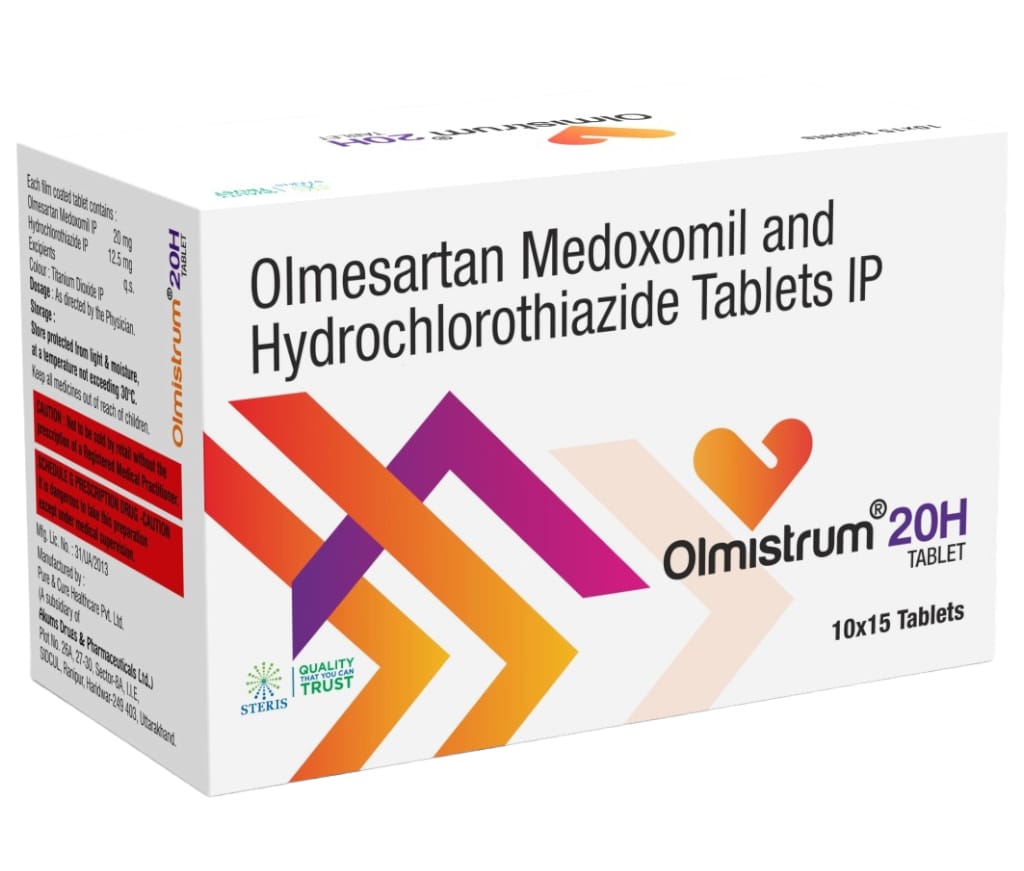
Olmesartan Medoxomil and Hydrochlorothiazide is a combination antihypertensive medicine prescribed to help control high blood pressure in adults when one medicine alone may not provide adequate control or when combination treatment is considered appropriate. Olmesartan medoxomil belongs to a group of medicines called angiotensin II receptor blockers (ARBs). It works by blocking the action of angiotensin II, a substance that narrows blood vessels, allowing the blood vessels to relax. Hydrochlorothiazide belongs to the thiazide diuretic group and helps the kidneys remove excess sodium and water through urine. These complementary actions help reduce blood pressure. Consistent blood pressure control is important because untreated hypertension can increase the risk of stroke, heart attack, and kidney complications. Your doctor may prescribe this combination alongside lifestyle measures such as reducing salt intake, maintaining a healthy weight, exercising regularly, and limiting alcohol consumption.
How to use
Follow the prescribed dose: Take the amount recommended by your doctor. Do not increase, decrease, or change the dose without medical advice. Take it regularly: Take the medicine at approximately the same time each day to maintain consistent blood pressure control. Follow food instructions: The tablet can generally be taken with or without food. Follow your product leaflet and your doctor's instructions. Swallow with water: Swallow the tablet as directed. Do not crush or split it unless your pharmacist confirms that doing so is appropriate for your specific product. Manage missed doses: If you forget a dose, follow the patient leaflet or ask your pharmacist. If it is nearly time for the next dose, skip the missed dose. Never take two doses together to compensate. Monitor blood pressure: Check your blood pressure regularly as recommended by your healthcare professional and attend scheduled follow-up appointments. Attend blood tests: Your doctor may monitor kidney function and electrolyte levels, including sodium and potassium, during treatment. Prevent dizziness: Rise slowly from sitting or lying down, especially when beginning treatment or changing the dose. Check medicine interactions: Tell your doctor about other blood pressure medicines, anti-inflammatory painkillers, lithium, potassium supplements, and potassium-containing salt substitutes. Maintain a healthy lifestyle: Follow advice about exercise, dietary salt, weight management, and other measures that support blood pressure control. Continue treatment appropriately: High blood pressure may not cause noticeable symptoms. Do not discontinue the medicine simply because you feel well.