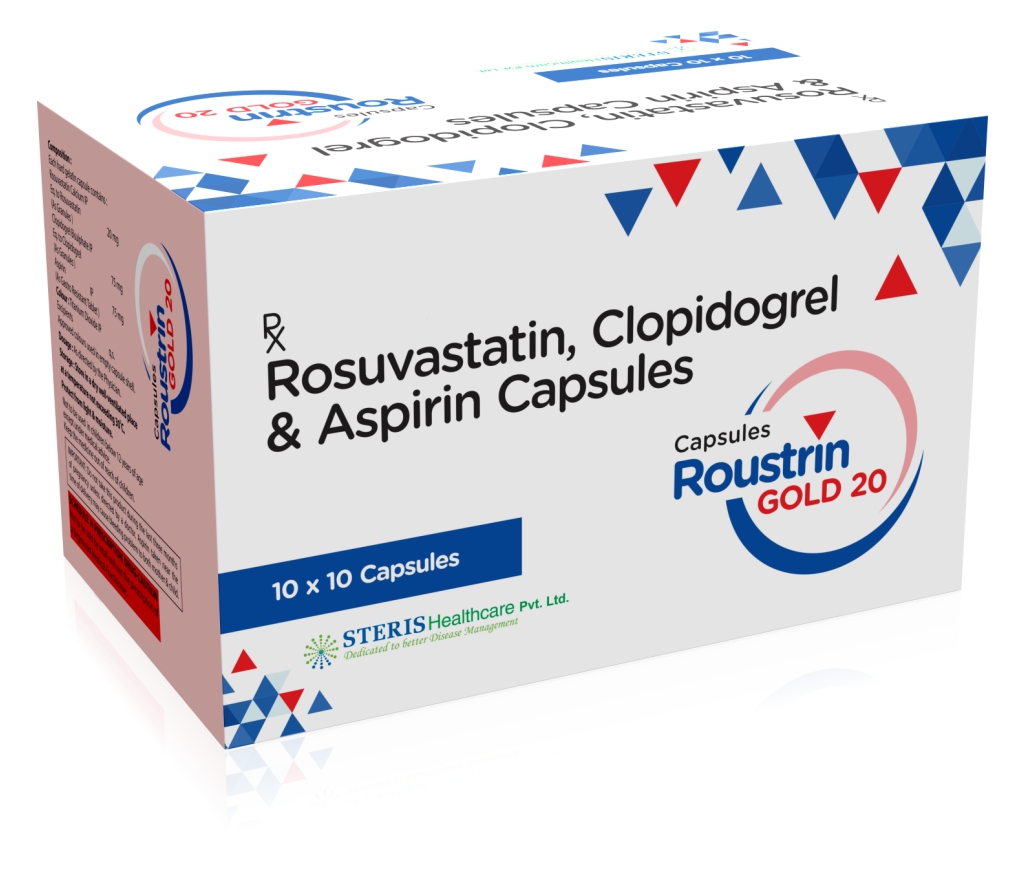

Medicine information
Uses & overview
Rosuvastatin 20 mg + Clopidogrel 75 mg + Aspirin 75 mg is a combination of three active ingredients that work through different mechanisms to support cardiovascular risk management in appropriately selected patients. It may be prescribed to patients with coronary artery disease or certain individuals following a heart attack or coronary intervention, depending on their clinical condition and the recommendations of their healthcare professional. Rosuvastatin 20 mg belongs to the statin group of medicines. It reduces cholesterol production in the liver and helps lower LDL cholesterol, supporting long-term cardiovascular risk reduction. Clopidogrel 75 mg is an antiplatelet medicine that inhibits platelet aggregation. Aspirin 75 mg also reduces platelet aggregation through a different mechanism. Together, clopidogrel and aspirin help reduce the formation of harmful blood clots in patients for whom dual antiplatelet therapy is indicated. The combination may simplify treatment for patients who require all three medicines. However, it can increase the risk of bleeding and is not appropriate for everyone. The higher rosuvastatin strength of 20 mg may require particular consideration of cholesterol targets, kidney function, liver health and other medicines.
How to use
Follow the prescribed dose: Take the medicine only if your doctor has prescribed this exact combination and strength. Do not change the dose independently. Maintain a regular schedule: Take it at the recommended time each day. Consistent use helps maintain the intended treatment effect. Follow administration instructions: Swallow the dosage form as directed on the product label. Follow specific instructions about food, particularly if the product contains an enteric-coated or modified-release formulation. Do not double a missed dose: Follow the patient leaflet or ask your pharmacist what to do if you miss a dose. Never take an extra dose to compensate. Watch for bleeding: Clopidogrel and aspirin increase bleeding risk. Contact your doctor for unusual bruising, persistent nosebleeds or other unexplained bleeding. Black stools, vomiting blood or severe bleeding require urgent medical assessment. Inform your doctor about other medicines: Report anticoagulants, other antiplatelet medicines, anti-inflammatory painkillers, supplements and cholesterol-lowering medicines to avoid potentially harmful interactions. Attend recommended check-ups: Your doctor may monitor cholesterol levels, liver function, kidney function and symptoms of bleeding or muscle problems. Do not stop treatment abruptly without advice: Stopping antiplatelet therapy, especially after coronary stent placement, can increase the risk of serious blood clots. Store correctly: Keep the medicine in its original packaging and follow the storage instructions printed on the label. Keep it away from children.