
Medicine information
Uses & overview
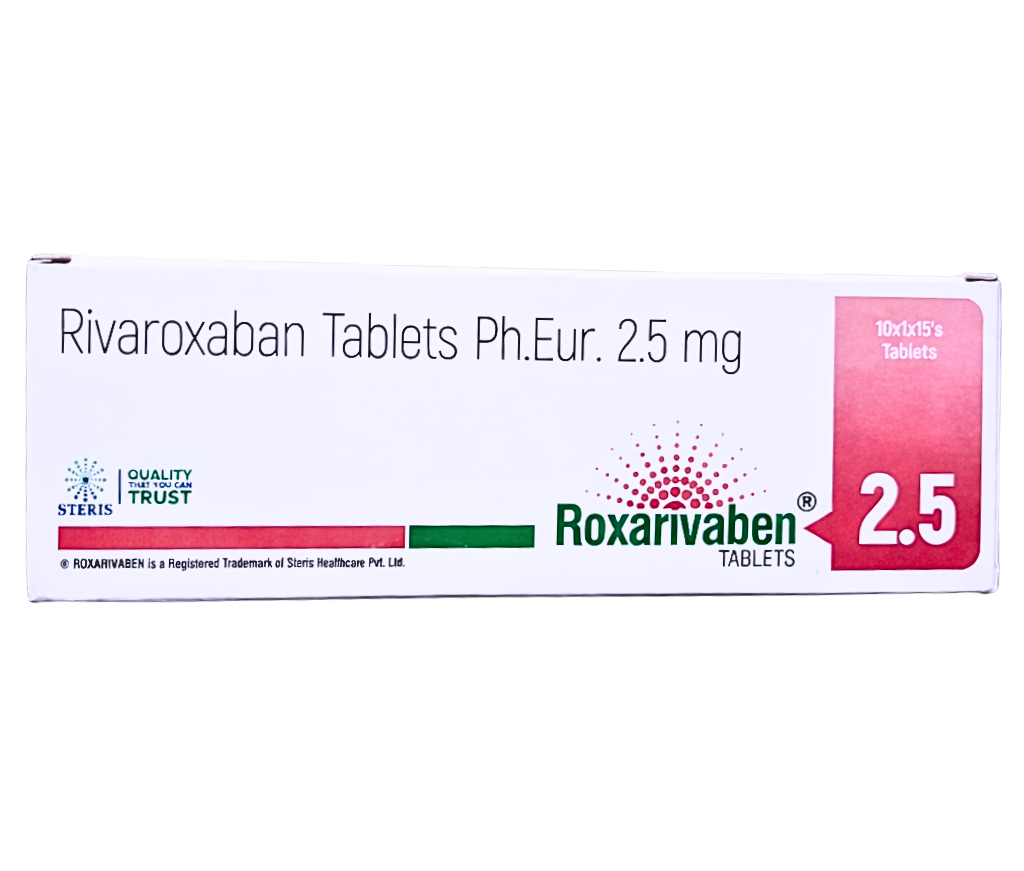
Rivaroxaban 2.5 mg is a prescription anticoagulant medicine used to help prevent certain blood clot-related cardiovascular complications in eligible patients. It belongs to a group of medicines known as direct factor Xa inhibitors. Rivaroxaban works by blocking factor Xa, a substance involved in the blood-clotting process, thereby reducing the formation of harmful blood clots. Doctors may prescribe Rivaroxaban 2.5 mg alongside low-dose aspirin for selected adults with coronary artery disease (CAD) or peripheral artery disease (PAD) to reduce the risk of major cardiovascular events, such as heart attack, stroke, and cardiovascular death. The suitability of this treatment depends on the patient's diagnosis, medical history, and bleeding risk. This strength is not interchangeable with higher rivaroxaban doses prescribed for other conditions.
How to use
1. Follow your prescription: Take Rivaroxaban 2.5 mg exactly as directed by your doctor. For eligible adults with coronary artery disease or peripheral artery disease, the commonly approved regimen is 2.5 mg twice daily with low-dose aspirin. Your individual treatment must follow your prescription. 2. Maintain a regular schedule: Take the medicine at approximately the same times each day, usually once in the morning and once in the evening, according to your prescribed regimen. 3. Take it with or without food: Rivaroxaban 2.5 mg can generally be taken with or without food. Swallow the tablet with water and follow the instructions supplied with your product. 4. Follow aspirin instructions carefully: This strength is commonly prescribed with low-dose aspirin for specific cardiovascular conditions. Do not add aspirin or other antiplatelet medicines unless your doctor recommends them. 5. Manage missed doses appropriately: If you miss a dose, follow the instructions provided by your doctor or patient leaflet. Do not double your next dose to compensate for a missed tablet. 6. Tell your doctor about other medicines: Inform your healthcare professional about anticoagulants, antiplatelet medicines, ibuprofen, naproxen, supplements, and herbal products. Some combinations can substantially increase bleeding risk. 7. Watch for bleeding: Seek medical advice for unusual bruising, frequent nosebleeds, prolonged bleeding, or blood in your urine. Black stools, vomiting blood, severe headaches, or uncontrolled bleeding require urgent medical attention. 8. Inform healthcare professionals before procedures: Tell your doctor and dentist that you take rivaroxaban before surgery or dental treatment. Never discontinue it independently, because stopping may increase your risk of cardiovascular complications. 9. Attend follow-up appointments: Your doctor may review your kidney function, liver health, bleeding risk, and other medicines to ensure treatment remains appropriate. Always use Rivaroxaban 2.5 mg under medical supervision and follow your locally approved patient information leaflet.