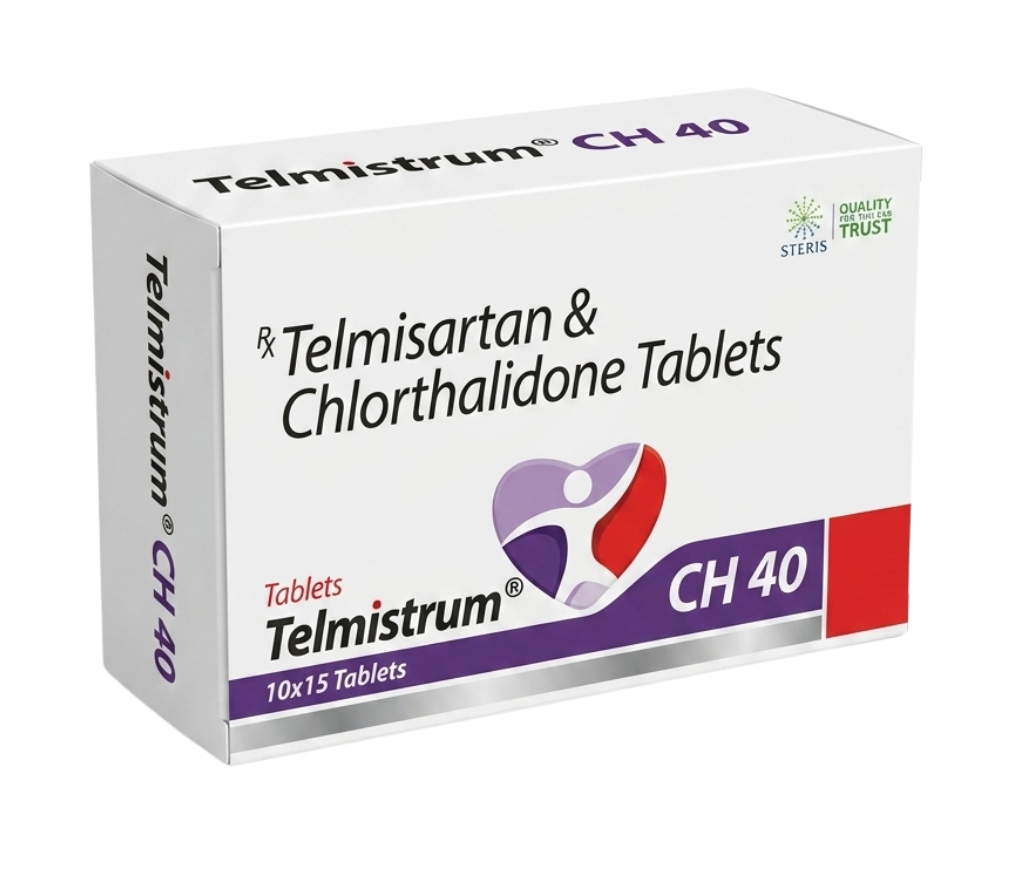

Medicine information
Uses & overview
Telmisartan 40 mg + Chlorthalidone 12.5 mg is a combination antihypertensive medicine used to help control high blood pressure in adults when a healthcare professional considers treatment with both ingredients appropriate. Telmisartan works by blocking angiotensin II receptors, helping blood vessels relax and reducing the resistance against which the heart pumps. Chlorthalidone is a thiazide-like diuretic that increases the elimination of sodium and water through the kidneys, helping reduce fluid volume and blood pressure. By combining these mechanisms, the medicine can provide more effective blood pressure control for suitable patients than either ingredient alone. Maintaining blood pressure within the recommended range can help reduce the long-term risk of cardiovascular complications, including stroke and heart attack. Possible side effects include dizziness, light-headedness, increased urination, dehydration, and changes in blood potassium or sodium levels. Telmisartan may also affect kidney function and increase potassium levels in certain patients, while chlorthalidone may lower potassium and sodium. Your doctor may monitor blood pressure, kidney function, and electrolytes during treatment.
How to use
Follow your prescription: Take the exact dose recommended by your healthcare professional. Do not increase or decrease the dose yourself, even if your blood pressure improves. Take it consistently: This combination may be prescribed once daily. Follow your product's instructions and take it at approximately the same time each day. Follow food instructions: It may be taken with or without food, depending on the product instructions. Swallow the tablet with water and do not crush or split it unless your pharmacist confirms that doing so is appropriate. If you miss a dose: Take it when you remember unless it is nearly time for your next dose. If the next dose is near, skip the missed dose and resume your usual schedule. Do not double the dose. Monitor blood pressure: Check your blood pressure as advised and attend follow-up appointments. Your doctor may also request blood tests to assess kidney function, sodium, potassium, and other electrolytes. Maintain appropriate hydration: Chlorthalidone increases urine production and may contribute to dehydration. Follow your doctor's fluid-intake advice, particularly during hot weather, vomiting, or diarrhoea. Review other medicines: Tell your doctor about all prescription medicines, over-the-counter products, and supplements you take, especially potassium supplements, lithium, other blood pressure medicines, and anti-inflammatory painkillers such as ibuprofen. Avoid stopping treatment independently: High blood pressure often has no obvious symptoms. Continue treatment unless your healthcare professional advises otherwise. Recognise warning signs: Seek medical attention for fainting, severe weakness, an irregular heartbeat, or signs of significant dehydration.