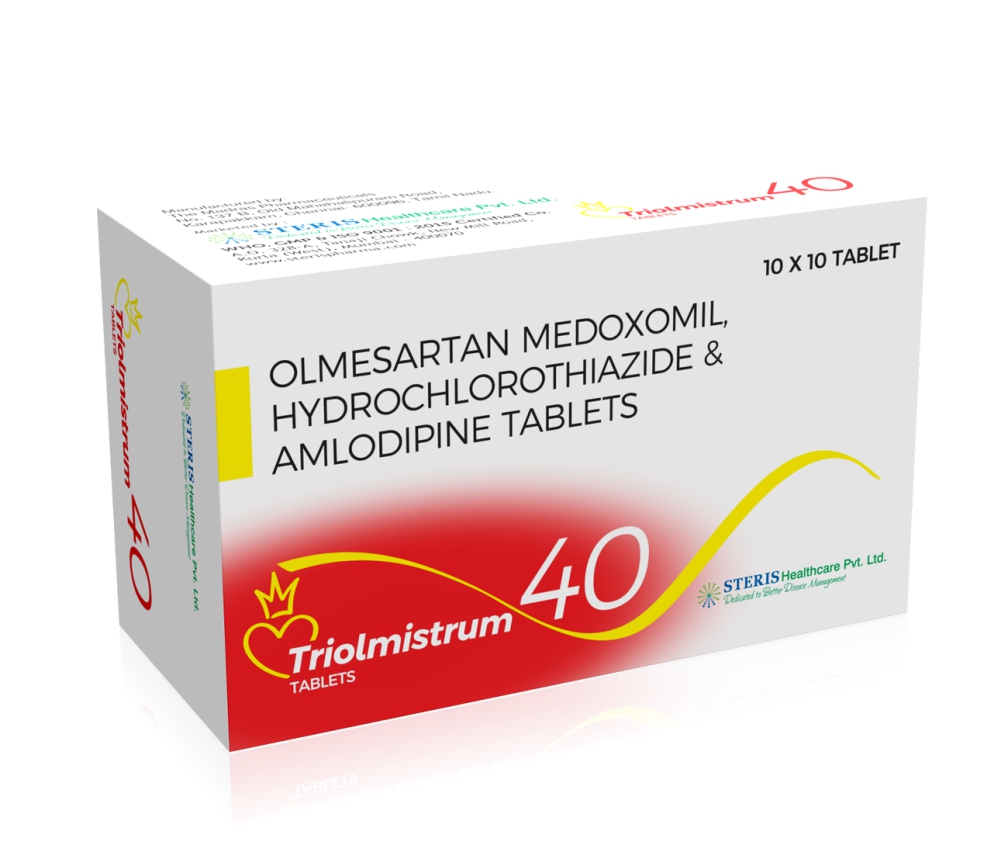

Medicine information
Uses & overview
Olmesartan, Amlodipine & Hydrochlorothiazide (HCTZ) is a prescription combination medicine used to manage high blood pressure, particularly in patients who need multiple medicines to achieve effective blood pressure control. It combines three active ingredients that work through different mechanisms. Olmesartan is an angiotensin II receptor blocker (ARB) that helps relax blood vessels. Amlodipine is a calcium channel blocker that reduces the contraction of blood vessel muscles, improving blood flow. Hydrochlorothiazide is a thiazide diuretic that helps the kidneys remove excess salt and water through urine. Together, these medicines help lower blood pressure and may reduce the risk of complications such as stroke and heart attack when used as part of an appropriate treatment plan. Possible side effects include dizziness, ankle swelling, increased urination, dehydration, and electrolyte imbalances. The combination may also affect kidney function and potassium or sodium levels, so your doctor may recommend regular blood tests and blood pressure monitoring.
How to use
Follow the prescribed dosage: Take the exact dose recommended by your healthcare professional. Do not increase, reduce, or stop the medicine without medical advice. Take it consistently: This combination is commonly taken once daily. Taking it at the same time each day can help maintain steady blood pressure control. Follow your prescription for the specific product. Take it with or without food: The medicine can generally be taken with or without food. Swallow the tablet with water and follow the instructions provided with your formulation. Consider the timing: Because hydrochlorothiazide increases urination, morning administration may be more convenient. Follow your doctor's instructions about the best time for your dose. Manage missed doses carefully: If you forget a dose, follow the patient leaflet or ask your pharmacist for advice. Do not take a double dose to compensate for a missed tablet. Monitor blood pressure regularly: Check your blood pressure as advised and maintain a record of your readings for follow-up appointments. Maintain appropriate hydration: Follow your doctor's advice on fluid intake, especially during hot weather or illness. Vomiting, diarrhoea, and excessive sweating may increase dehydration risk. Inform your doctor about other medicines: Report potassium supplements, salt substitutes containing potassium, other blood pressure medicines, and anti-inflammatory painkillers because interactions may occur.
Storage
Store in cool and dry place