
Medicine information
Uses & overview
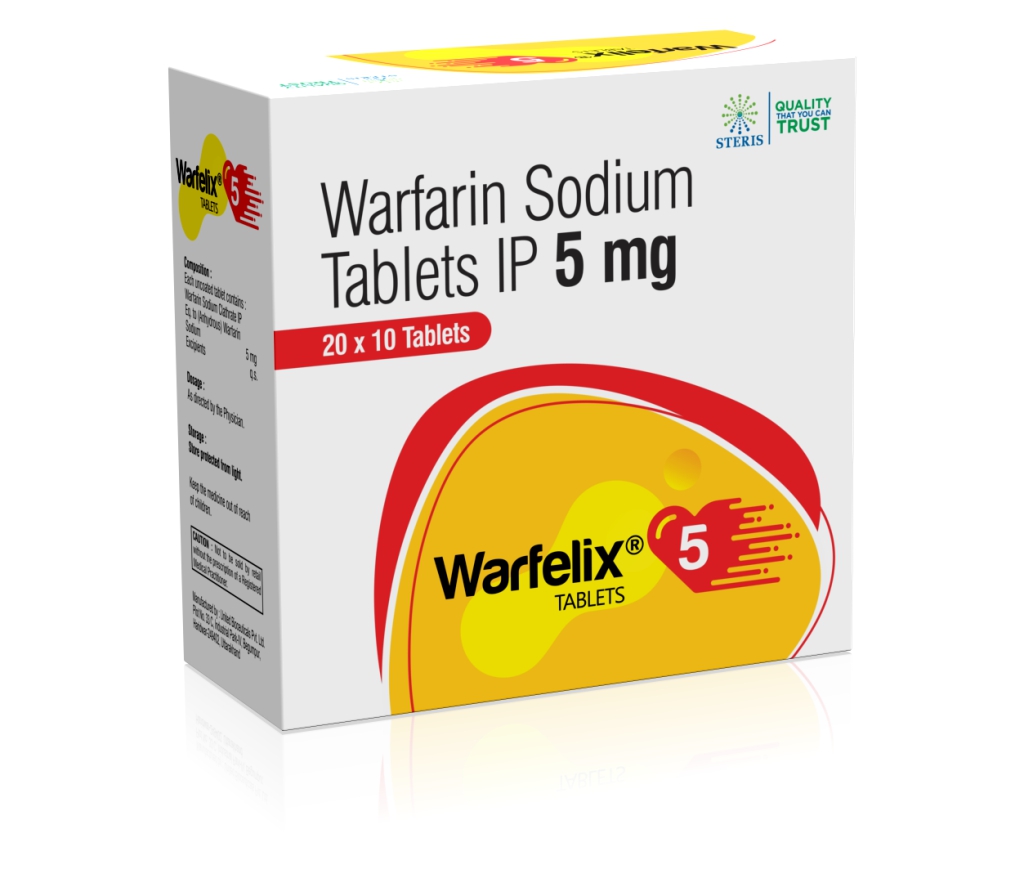
Warfarin Sodium IP 5 mg is an oral anticoagulant medicine prescribed to help prevent and treat harmful blood clots in patients with specific medical conditions. It belongs to a class of medicines called vitamin K antagonists. Warfarin works by reducing the liver's production of vitamin K-dependent clotting factors, helping slow the blood-clotting process and reduce the risk of clots forming or growing. Doctors may prescribe Warfarin Sodium IP 5 mg for deep vein thrombosis (DVT), pulmonary embolism (PE), and prevention of blood clots in selected patients with atrial fibrillation or mechanical heart valves. Warfarin does not dissolve existing clots immediately; it helps prevent further clotting while the body gradually processes existing clots. The appropriate dose depends on the patient's medical condition, INR blood test results, age, diet, liver function, and other medicines. The 5 mg strength is not necessarily the correct daily dose for every patient. Regular international normalized ratio (INR) monitoring is essential to maintain the desired anticoagulant effect and reduce the risk of excessive bleeding or dangerous clot formation.
How to use
Follow your prescribed dosage: Take only the dose recommended by your healthcare professional. The 5 mg tablet strength does not mean every patient should take one tablet daily. Take it at a consistent time: Warfarin is commonly taken once daily, often in the evening. Follow your prescription and maintain a consistent schedule. Attend regular INR tests: Your doctor will monitor your international normalized ratio (INR) to assess how quickly your blood clots. Your dose may be adjusted according to the results. Handle missed doses carefully: If you miss a dose, follow your anticoagulation clinic's instructions. Do not double your next dose. Contact your healthcare professional if you are unsure what to do. Maintain a consistent diet: Foods rich in vitamin K, including spinach, broccoli, and other leafy green vegetables, can affect warfarin. Keep your intake consistent rather than suddenly changing your diet. Check for medicine interactions: Antibiotics, aspirin, ibuprofen, herbal products, and supplements may interact with warfarin. Consult your doctor or pharmacist before starting or stopping any medicine. Reduce injury risks: Use a soft toothbrush and take care when shaving or handling sharp objects because bleeding may be harder to stop. Recognize warning signs: Seek urgent medical attention for uncontrolled bleeding, black stools, blood in urine, vomiting blood, or a severe headache after a head injury.